
Understanding Olive Oil
FAQs
Why choose our olive oil?
For thousands of years, the olive tree has symbolized peace, wisdom, endurance and the connection between generations. Across the Mediterranean, these remarkable trees have survived centuries of drought, changing civilizations and the passage of time.
We believe that heritage is worth preserving.
At Di Giovanni Olive Oil, our small grove in Abruzzo follows the rhythm of traditional cultivation. Mature trees grow naturally, nourished by seasonal rainfall. We care for them throughout the year, accepting that every harvest depends on what nature provides.
But olive farming is changing.
Increasingly, traditional groves face competition from super-intensive plantations – thousands of trees planted in tightly spaced rows, shaped into hedgerows for mechanical harvesting and often dependent on irrigation to sustain high yields.
These systems produce oil efficiently and at lower cost. But in a Mediterranean region facing increasing water scarcity, shouldn't we be asking about the environmental cost of producing ever-cheaper olive oil?
Traditional rainfed groves require no additional irrigation water. They also help preserve distinctive landscapes, agricultural heritage and the livelihoods of small rural communities.
When you choose our olive oil, you're supporting more than a small independent grower. You're helping preserve a way of farming that has connected people to their land for generations.
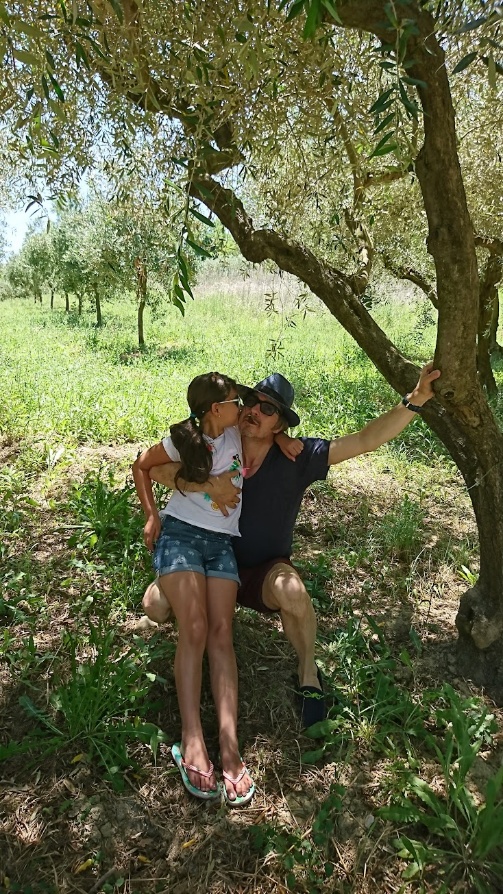
One day, our children and grandchildren will inherit the countryside we leave behind.
Will it be a landscape of ancient olive trees, small family groves and living traditions? Or one where agricultural efficiency has gradually replaced much of what made the Mediterranean countryside special?
Every purchase is a small choice about that future.
Why is olive oil so cheap at supermarkets?
Prices reflect many factors: production scale, purchasing volumes, origin, harvest, packaging and promotions. Large retailers can negotiate lower prices through substantial purchases. A low price alone does not establish poor quality.
Look beyond an Italian-looking label. Check whether the product is extra virgin, its declared origin, the best-before date and any harvest information. An EU origin declaration can describe a blend from several EU countries; it does not necessarily mean the olives were grown in Italy.
Buying directly from a local grower gives you a clearer connection to where the olives were grown and harvested. Imported oils can also be good quality; origin alone does not determine quality or compliance with the rules for sale in the EU.
Taste is useful for judging freshness and flavour, but it cannot establish every aspect of safety or quality. Off flavours may reflect poor fruit, pest damage, processing or storage. The olive fruit fly is one reason growers must carefully monitor their fruit.
Why do some small local growers sell olive oil at surprisingly low prices?
Italy has many small olive growers selling their oil through social media, local markets and word of mouth, often at attractive prices. Much of this oil may be excellent, genuinely artisanal and produced with great care.
But how much do you really know about what you're buying?
Has the oil been tested? How was it stored? Where was it packaged?
Commercial olive oil production and sale are subject to food safety, hygiene, traceability and labelling requirements. Extra virgin classification involves laboratory measurements, including acidity, peroxide values and ultraviolet absorption, as well as sensory evaluation.
Proper storage and packaging are equally important. Exposure to heat, light and oxygen can compromise even the finest oil.
And what about unfiltered oil? Fresh, cloudy olive oil can be delicious, but residual moisture and sediment can affect its stability over time. Mechanical filtration helps preserve quality and extend its useful life.
A low price doesn't necessarily mean poor quality. But a local origin alone doesn't guarantee quality either.
At Di Giovanni Olive Oil, we believe you deserve to know not just who grows your olives, but how the resulting oil is tested, protected and brought to your table.
What makes an olive oil extra virgin?
Extra virgin olive oil must meet defined chemical and sensory standards. These include limits for free acidity and oxidation-related measures, as well as sensory requirements.
Its quality cannot be determined by acidity levels or taste alone.
For Di Giovanni Olive Oil, transparency about harvest, processing and product characteristics is an important part of earning our customers' confidence.
Why are some olive oils clear while others are cloudy or opaque?
The appearance largely depends on how much microscopic olive material and residual moisture remain suspended in the oil. Fresh unfiltered oil often looks cloudy, while mechanical filtration removes most of these elements, producing a clearer appearance. Natural settling can also make oil clearer over time. Cloudiness alone does not indicate whether an olive oil is better or worse – the quality of the olives, the extraction process and proper storage matter much more.
Is unfiltered olive oil better?
Not necessarily. Unfiltered olive oil offers a distinctive experience, especially immediately after pressing. Its characteristic cloudiness comes from suspended olive material and residual moisture.
These elements can also make it less stable during storage. Unfiltered oil is best appreciated for its fresh character rather than assumed to be inherently superior.
Why filter extra virgin olive oil?
Mechanical filtration removes fine suspended solids and residual water, helping protect the oil against certain forms of long-term deterioration.
Importantly, filtration does not necessarily remove the desirable bitter and peppery notes, although it gives the oil a clearer appearance.
Is naturally clarified olive oil inferior?
No. Natural settling is a traditional clarification method. When properly handled and separated from sediment, naturally clarified oil can offer a different sensory experience. Its quality still depends on the original fruit, processing conditions, storage and the characteristics of the finished oil.
Does olive oil improve with age?
Olive oil is not wine. Aging does not inherently improve its quality.
Over time, some aromatic intensity, bitterness and pungency may diminish. Some consumers prefer that gentler profile, but the oil must be carefully stored to minimize oxidation and maintain its extra virgin characteristics.
What is the sediment I sometimes see at the bottom of olive oil glass bottles?
Sediment is less likely in clarified or mechanically filtered oil. In unfiltered oil, fine olive particles can settle at the bottom over time. Sediment alone does not establish whether an oil is safe or of good quality; prolonged contact with sediment and residual moisture can affect its flavour and stability. Enjoy unfiltered oil promptly and follow the storage instructions.
How do I properly store olive oil?
Store olive oil in a cool, dark place, away from the cooker, direct sunlight and other heat sources. Keep bottles tightly closed and use the oil within its recommended period. Heat, air, light and time reduce freshness. Our 3 L Bag-in-Box helps protect the oil from light and limits air exposure as it is dispensed, in a practical size for regular use.
Why do we use Bag-in-Box packaging?
Light and oxygen are two important enemies of olive oil freshness. Protective Bag-in-Box packaging helps limit both, particularly when oil is consumed gradually.
We believe the packaging should help preserve the product, rather than simply look attractive on a shelf.
Why is Rustica in a 750 ml bottle only?
Rustica is freshly pressed seasonal oil (olio novello), rich with bright, peppery high notes that are best enjoyed right away. A 750 ml bottle gives you plenty to savor on special salads and appetizers, while ensuring every drop is used while the flavor is at its absolute peak.
What about pesticides?
Crop protection is often important in olive growing. Pests such as the olive fruit fly can seriously damage a harvest, so monitoring and timely action matter.
No routine spraying. We monitor our grove and apply treatments only when there is a verified, active threat. If there is no threat, we do not spray.
Responsible use. Treatments must follow the authorised product instructions, including the permitted dose, application conditions and the waiting period before harvest. Food sold in the EU must comply with the applicable pesticide-residue limits.
Natural soil nutrition. We are not certified organic. We use organic manure in dried pellet form to nourish our soil and keep our trees healthy.